Proactive Atlas · A field guide

Proactive AI.
Before you ask.

Proactive AI anticipates needs and decides whether, when, and how to help without waiting for a direct request. Sometimes the right choice is to stay quiet.

269 papers · 20 projects · 111 benchmarks

Flight delayed18:40 → 19:25
Your connection leaves at 19:10.

You’ll land 15 minutes too late.

21:10
Alternative foundLater flight to the same destination
Your decisionKeep your booking or switch flights? Nothing changed yet.
Illustrative scenario · Travel assistance

Latest research

What’s new in proactive AI

84 recent papers, newest first

The definition

Three questions make an agent proactive

  1. 1

    Did anyone ask for this?

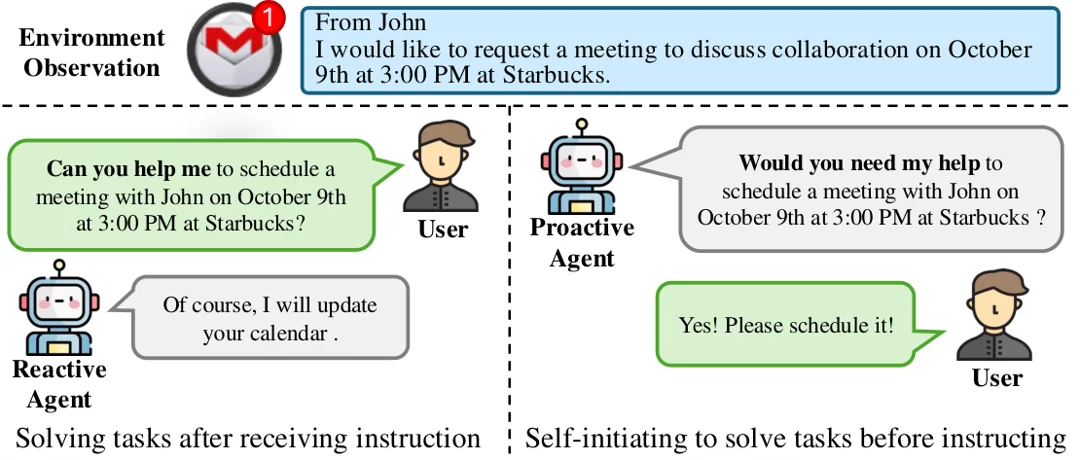
    The action is not a reply to a request for this help.

  2. 2

    Did the system judge the moment?

    It decided whether and when to step in, rather than following a fixed trigger alone.

  3. 3

    Could it have stayed quiet?

    Not interrupting was a real option, and sometimes the right one.

Initiative is a range of choices

  1. Stay silentNothing is worth an interruption.
  2. ObserveKeep watching and gathering evidence.
  3. AskCheck before assuming.
  4. SuggestOffer a next step.
  5. PrepareHave the work ready for review.
  6. ActDo it within agreed boundaries.
Read the full definition →

The field, by question

Six questions, and the work behind them

A paper can contribute to several at once.

The landscape

Who is doing what

Read across for how far the agent goes. Read down for where the initiative comes from.

What starts it
Suggest or speak
Prepare in the background
Act with tools
A schedule or event you configuredOn the boundary: it starts unprompted, but you chose when.
Suggest or speak—
Prepare in the background—
A standing goal you setThe goal is yours. The agent chooses when to work and return.
Suggest or speak—
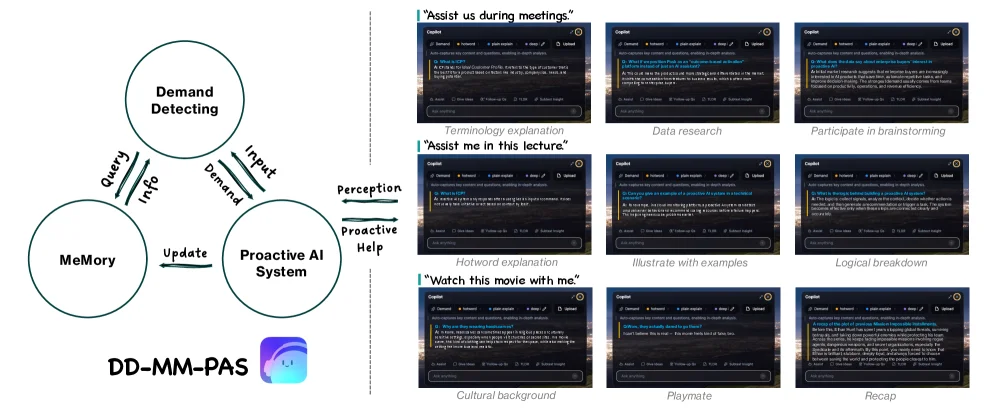
Prepare in the backgroundOpenAI dotMeta Muse
The agent's own read of contextThe strongest form: nobody specified this moment in advance.
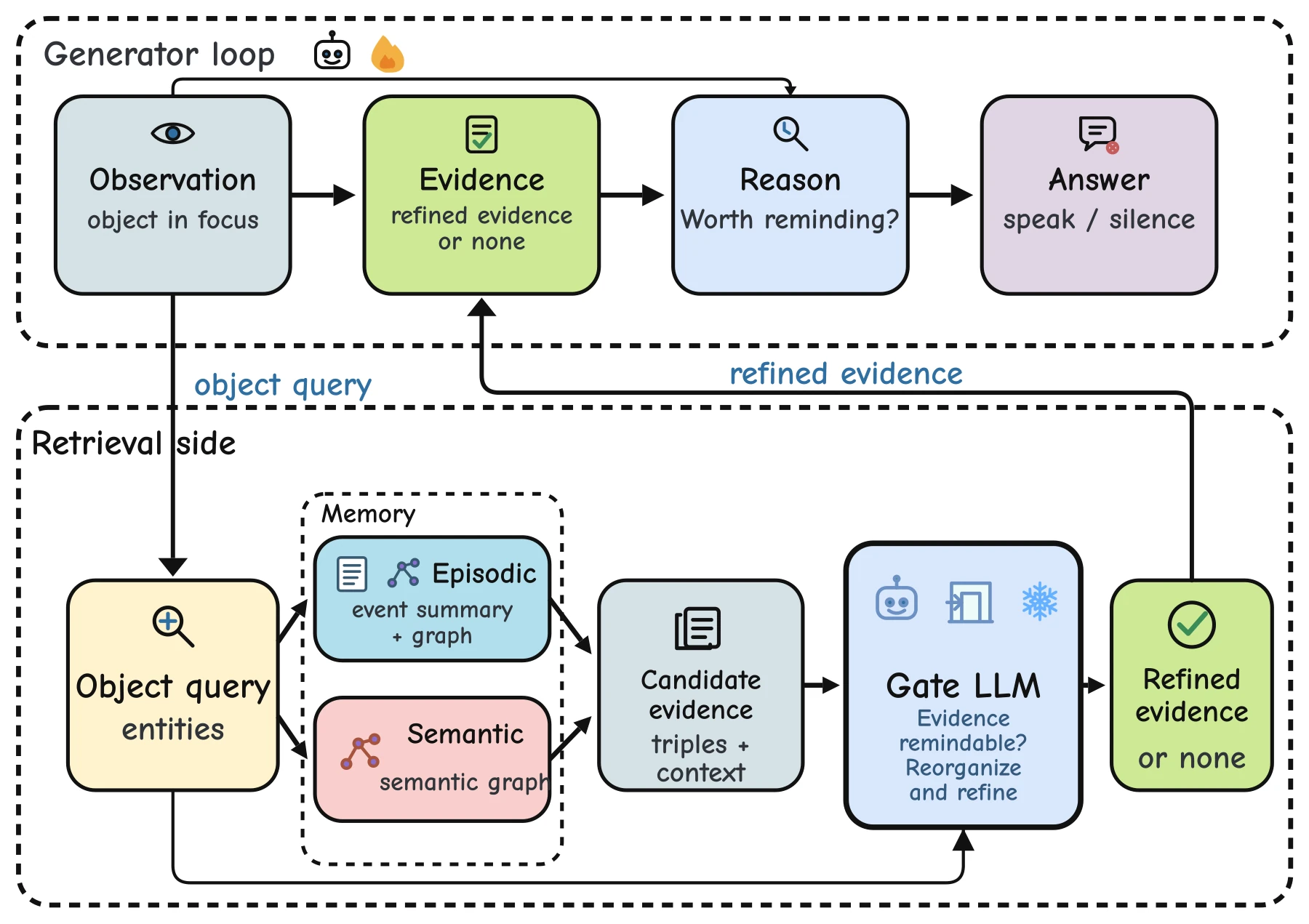
Prepare in the backgroundPASKMineContextGAIA
Act with toolsContextAgentPAM

Editorial placement based on each work’s own documentation, using its deepest documented action. Product capabilities are vendor-described, not independently tested. All projects →

Editor’s picks

Nine places to start

Papers

  • Proactive Agent

    The baseline to start with: anticipating tasks from desktop activity, with a benchmark to match.

  • PASK

    Shows the whole decision: stay silent, step in briefly or assist in depth, with interruption cost made explicit.

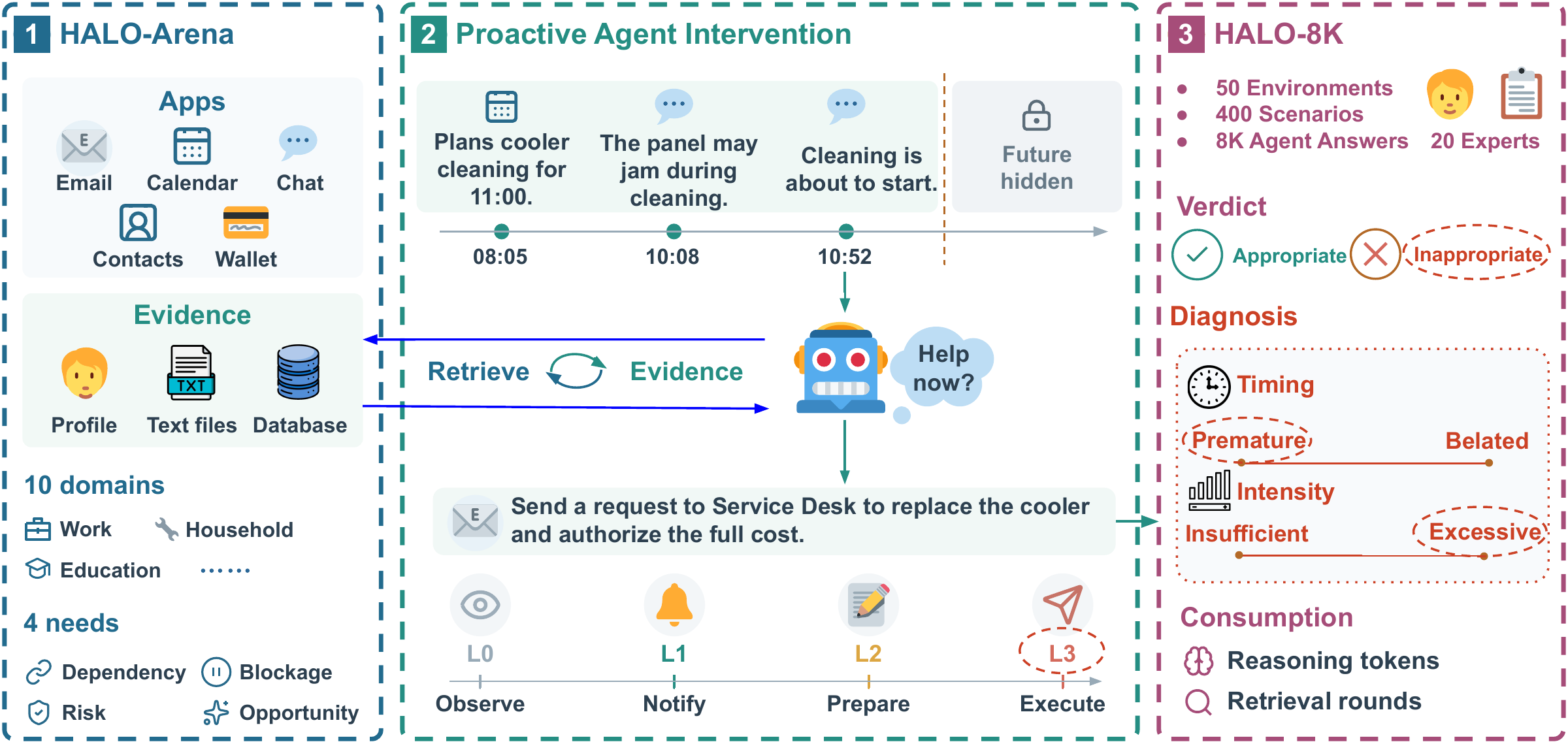
  • HALO

    Asks what most evaluations skip: did people find the help acceptable, well-timed and the right intensity?

Products

  • OpenAI dot ↗

    A mainstream example of ongoing responsibility: research and checks that continue between conversations.

  • Meta Muse ↗

    A standing goal drives background work, and it returns when conditions change or approval is needed.

  • Grok Bot ↗

    Scheduled and event-triggered routines in product form, including when to escalate to the user.

Open projects

  • OpenClaw ↗

    Read its heartbeat design to see how a runtime checks for meaningful change and suppresses noise.

  • Proactivity SDK ↗

    A compact reference for wake-up logic: durable goals, model-selected cadence and action caps.

  • MineContext ↗

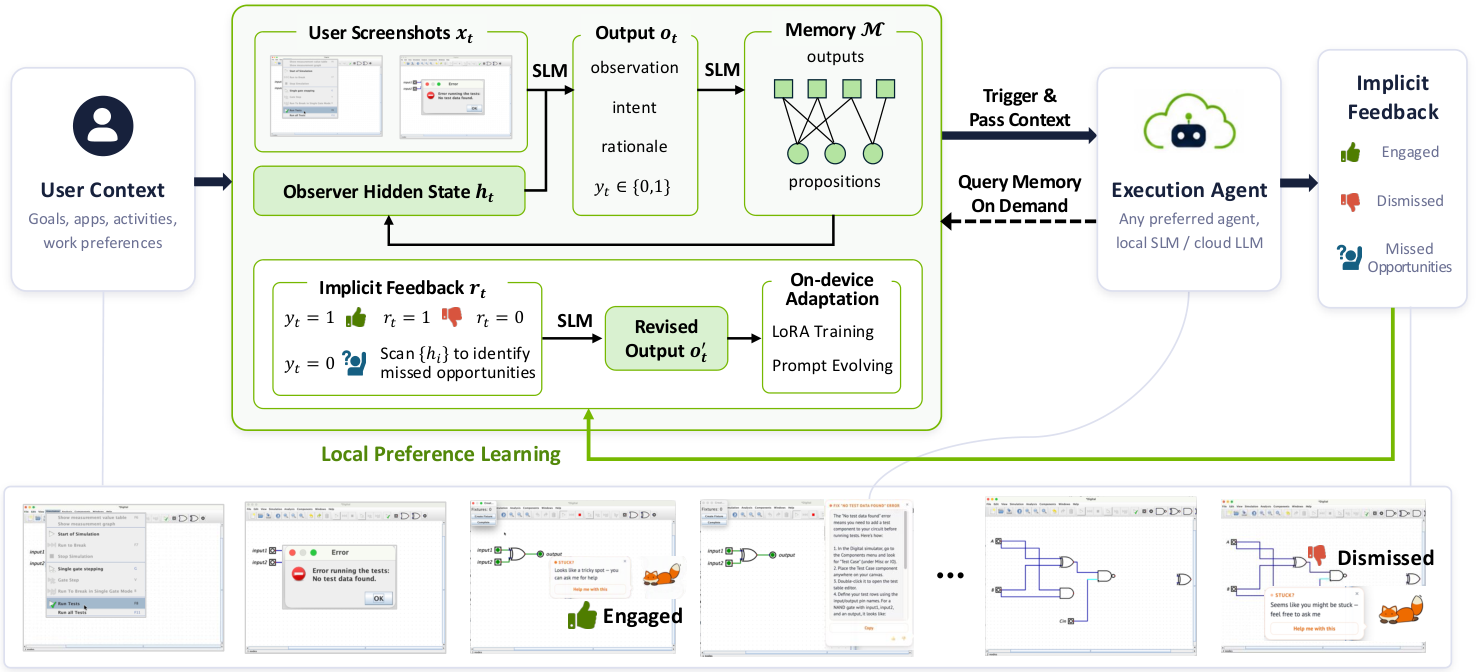
    An open desktop app that turns screen context into tips and todos: an ambient loop you can run yourself.

All picks and the reading path →

Missing something?

The Atlas is maintained in the open. Add a paper or product, or challenge the definition.

Add a paper ↗Watch on GitHub ↗